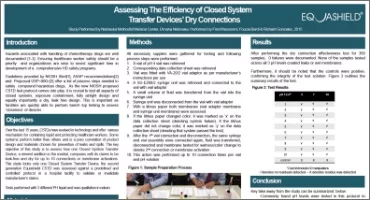
Assessing The Efficiency of Closed System Transfer Devices Dry Connections

Introduction

Hazards associated with handling of chemotherapy drugs are well documented [1-3]. Ensuring healthcare worker safety should be a priority and organizations are wise to invest significant time in development of a comprehensive HD safety programs. Guidelines provided by NIOSH Alert[1], ASHP recommendations[2] and Proposed USP<800>[3] offer a list of process steps needed to safely compound hazardous drugs. As the new NIOSH proposed CSTD test protocol comes into play, it is crucial to test all aspects of closed systems, exposure containment, fully airtight design and equally importantly a dry, leak free design. This is important as facilities are quickly able to perform bench top testing to assess ‘closeness’ of devices

Objectives

Over the last 15 years, CSTDs have evolved in technology and offer various mechanism for containing liquid and protecting healthcare workers. Some systems perform better than others and is a pure correlation of product design and materials chosen for prevention of leaks and spills. The key
objective of this study is to assess how one Closed System Transfer Device, a newest addition in the market, compares with its claims to be leak-free and dry for up to 10 connections or membrane activations. This study looks only one Closed System Transfer Device; the second generation Equashield CSTD was assessed against a predefined and
controlled protocol in a hospital facility to validate or invalidate
manufacturer’s claims.

Tests performed with 3 different PH liquid and was qualitative in nature.

Materials

To assess whether the Closed System is dry, it will be tested against several solutions to mimic various drugs’pH levels seen in chemotherapy compounding on a routinebasis.To perform this test the followingmaterialswere used:

  • 10 Vials with pH 4 liquid solution
  • 10 Vials with pH 7 liquid solution
  • 10 Vials with pH 10 liquid solution
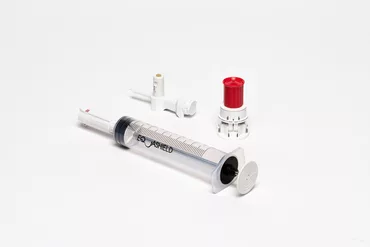
  • 30 Equashield VA-20/2 Vial Adaptors
  • 30 Equashield SU-EZ60/2 Syringe Units
  • Litmus Paper
  • Data Collection Sheets per protocol

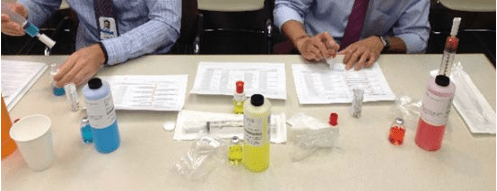
Prior to start of the test, 10 vials each of varying pH solutions were prepared for assessment in lieu of actual drugs for a total of 30 vials.

Figure 1: Sample Preparation Process
pH Test
Methods

All necessary supplies were gathered for testing and following process steps were performed:

  1. A vial of pH 4 vial was retrieved
  2. Corresponding data collection sheet was retrieved
  3. Vial was fitted with VA-20/2 vial adaptor as per manufacturer’s instructions per use
  4. A SU-EZ60/2 syringe unit was retrieved and connected to the vial with vial adaptor
  5. A small volume of fluid was transferred from the vial into the syringe unit
  6. Syringe unit was disconnected from the vial with vial adaptor
  7. With a litmus paper both membranes (vial adaptor membrane and syringe unit membrane) were assessed.
  8. If the litmus paper changed color, it was marked as ‘x’ on the data collection sheet (denoting system failure). If the litmus paper did not change color, it was marked as ‘y’ on the data collection sheet (denoting that system passed the test).
  9. After the 1st vial connection and disconnection, the same syringe and vial assembly were connected again, fluid was transferred, disconnected and membrane tested for wetness/color change to denote 2nd connection or membrane activation
  10. This action was performed up to 10 connection times per vial and pH solution

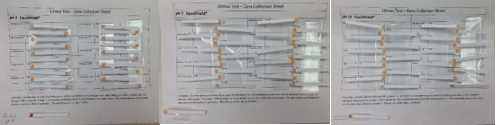
Data collection sheets were effectively populated for all test samples for a total of 3 buffer solutions, 10 vials per solution and 10 activations per vial totaling 300 data points.

Results

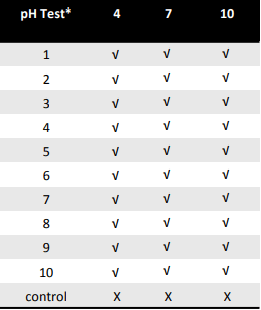
After performing the dry connection effectiveness test for 300 samples, 0 failures were documented. None of the samples tested across all 3 pH levels created leaks or wet membranes. Furthermore, it should be noted that the controls were positive, confirming the integrity of the test solution. Figure 3 outlines the summary results of the test.

* Each test included 10 manipulations
√ denotes no residuals detected — X denotes residue was detected

Conclusion

Key take away from the study can be summarized below:

  • Commonly found pH levels were tested in this protocol to
    assess its ability to remain dry
  • 300 measurements were generated by this study protocol with no residues found on the surface in any sample
  • Equashield was put to the test for its claim of being able to maintain a dry connection for up to 10 activations and passed the test

Equashield was leak free and dry and meets the NIOSH definition of a closed system transfer device with respect to its ability to maintain dry connections validating vendor’s claims.
Fluorescent Evaluation of Dry Connections in the EQUASHIELD™, Phaseal® and Tevadaptor®/Onguard™ Closed System Drug Transfer Devices

Objective

Evaluation of EQUASHIELDâ„¢ closed system drug transfer device, during perpetration and administration phases, for determining residual free and dry connections between Syringe Unit, Vial Adaptor and IV bag Spike Adaptor.

Phaseal® system by Carmel Pharma and Tevadaptor®/Onguard™ system by Teva Medical Ltd. were used as benchmarks.

Methods

Preparation phase simulation:

Vial Adaptors and 20ml Syringe Units were used to simulate the preparation phase. EQUASHIELDâ„¢ Vial Adaptors were connected to sealed 20ml vials filled with 15ml of 0.05% Fluorescein solution. A 7ml Fluorescein solution was drawn into the 20ml syringe and then 5ml were re-injected back into the vial. The process was repeated 14 additional times withdrawing/re-injecting 5ml of Fluorescein solution.

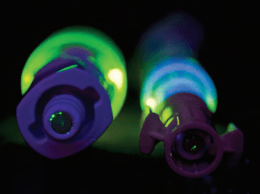
After each manipulation the Syringe Unit was disconnected from its respective Vial Adaptor and checked for leaks using UV light. Any detected leaks were recorded immediately. This process was repeated with 10 sets of EQUASHIELDâ„¢ Syringe Units and Vial Adaptors. Close up photographs of each Vial Adaptor and Syringe Unit were taken after 10 and after 15 manipulations.

Administration phase simulation:

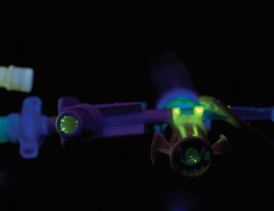
A similar process was repeated with 10 EQUASHIELDâ„¢ Syringe Units filled with 20ml Fluorescein solution dispensed through IV bag Spike Adaptors. A 2ml solution was injected with each Syringe Unit into an IV bag, disconnected and checked for leaks. the process was repeated 10 times.

Similarly, Phaseal® Protectors, Injectors and Infusion Adaptors, as well as Tevadaptor®/Onguard™ Vial Adaptors, Syringe Adaptors and Spike Port Adaptors, were used to simulate the drug preparation and administration phases. Every single procedure was followed by checking for leaks using UV light, and by taking close up photographs of the various component membranes after 10 manipulations.

Results

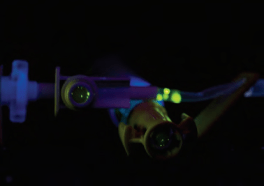
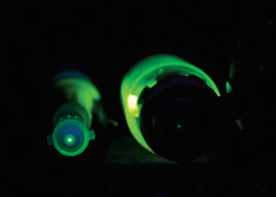
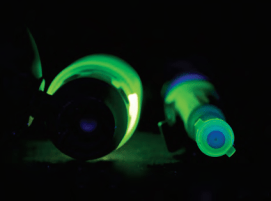
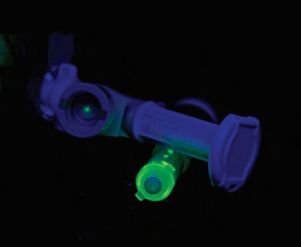
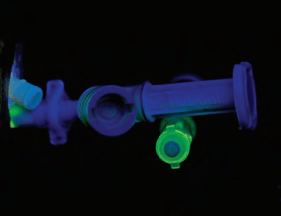
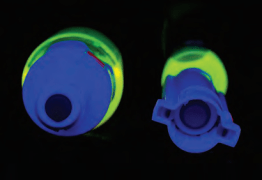
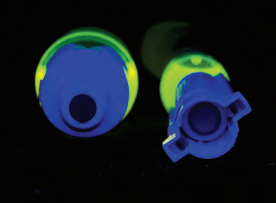
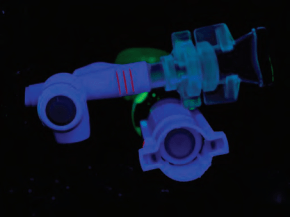
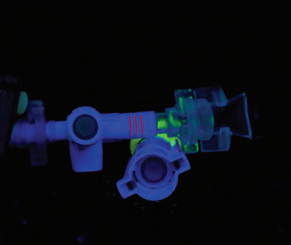
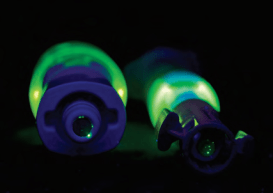
All Tevadaptor®/Onguard™ systems revealed visual signs of Flourescein leaks on the Vial Adaptors, Spike Port Adaptors and Syringe Adaptors as early as after the first or second manipulation (see Figures 1-4). Due to the comprehensive leaks, the number of manipulations was limited to 10 instead of 15.

12 of the 20 tested Phaseal® systems showed no visible signs of Flourescein leaks, whereas visual signs of Flourescein leaks were detected on 8 Phaseal® systems after 14, 11, 15, 13, 8, 7,10, 10 manipulations respectively (see Figures 5 – 8).

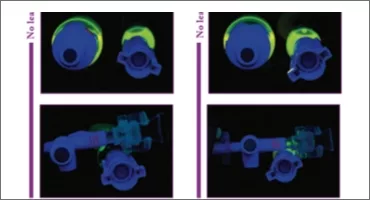
No visual signs of Flourescein leaks were perceived on any of the 20 EQUASHIELDâ„¢ devices (see Figures 9-12).

Conclusion

As visual signs of Flourescein leaks were detected in Tevadaptor®/ Onguard™, it is apparent that this system is not airtight and leak-proof, as recommended for closed system drug transfer devices by the National Institute of Occupational Safety and Health and the International Society of Oncology Pharmacy Practitioners.

40% of Phaseal® systems showed leakage after a considerable number of manipulations (between 8 and 15 manipulations).

Only EQUASHIELDâ„¢ showed residual free and dry connections during all preparations and administrations. No leakage was perceived with this system.

Figures 1 to 4 – Tevadaptor®/Onguard™ by Teva Medical, Ltd.

Figures 5 to 8 – Phaseal® by Carmel Pharma

Figures 9 to 12 – EQUASHIELD™ by Equashield Medical

What is a Closed System Transfer Device (CSTD)?

According to the National Institute for Occupational Safety and Health (NIOSH), a CSTD is a drug transfer device that mechanically prohibits the transfer of environmental contaminants into the system and the escape of hazardous drugs or vapors outside of the system1. These devices serve as a critical tool to prevent exposure to hazardous drugs, which can cause serious health effects in healthcare workers. The use of CSTDs has been mandated in several countries, including the United States, due to the high incidence of hazardous drug exposure among healthcare workers. In this article, we will explore the key features and regulatory requirements of CSTDs, and why they are essential in protecting healthcare workers from hazardous drug exposure.

Why are CSTDs so important?

Hazardous drugs, such as chemotherapy agents, antiviral medications, and immunosuppressive drugs pose significant health risks to medical personnel who handle them. These risks include skin irritation, allergic reactions, reproductive issues, and even the development of cancer2. To minimize exposure to hazardous drugs and ensure the long-term health and safety of medical personnel, it is essential to implement best practices and safety measures. 

What is the regulation status in the USA? 

Specific requirements mandated by USP 800 guidelines include: 

USP 800 is a set of guidelines3 developed by the United States Pharmacopeia (USP) and mandated by the Occupational Safety and Health Administration (OSHA) to prevent occupational exposure to hazardous drugs for healthcare workers. USP 800 aims to protect healthcare personnel, patients, and the environment by outlining safety standards for the handling and disposal of hazardous drugs in healthcare settings. 

  1. Proper use of personal protective equipment (PPE), such as gloves, gowns, masks, and eye protection. 
  1. Establishment of designated areas for receiving, storing, compounding, and administering hazardous drugs. 
  1. Implementation of engineering controls, including biological safety cabinets and compounding aseptic containment isolators. 
  1. Proper handling, decontamination, and disposal procedures for hazardous drugs and contaminated materials. 

Specific requirements mandated by USP 797 guidelines include:   

USP 7974 is a comprehensive set of standards designed to ensure safe compounding practices for sterile preparations. These regulatory requirements address critical aspects, including personnel qualifications, training, and hygiene; environmental quality and control; facilities and equipment; standard operating procedures (SOPs); and quality assurance and documentation. Personnel involved in sterile compounding must undergo proper training and demonstrate competency through written and practical assessments while adhering to strict hygiene protocols.  

  1. Personnel Qualifications and Training: Ensure that all staff involved in sterile compounding have appropriate training, demonstrate competency through assessments, and follow strict hygiene protocols. 
  1. Environmental Quality and Control: Maintain defined air quality standards using primary engineering controls, and regularly monitor the compounding environment to minimize contamination risks. 
  1. Facilities and Equipment: Design compounding areas that are segregated from other activities, with proper equipment such as laminar airflow workbenches or biological safety cabinets, and adhere to controlled temperature and humidity conditions. 
  1. Standard Operating Procedures (SOPs) and Quality Assurance: Develop and implement SOPs for all compounding activities, including preparation, labeling, storage, and disposal of compounded sterile preparations, and perform quality control measures such as sterility testing, endotoxin testing, and beyond-use dating. 

Closed System Transfer Devices (CSTDs), such as EQUASHIELD’s CSTD product line, play a crucial role in reducing the risk of exposure and contamination while complying with USP 800 and USP 797 guidelines. EQUASHIELD CSTDs provide a physical barrier between the clinician and the hazardous drug, preventing the escape of hazardous drugs or vapors into the environment during compounding and administration processes. 

When does exposure to hazardous drugs occur? 

Exposure to hazardous drugs and their vapors occurs throughout the whole chain of drug handling, from receiving at the hospital warehouse until disposal. Compounding and administration constitute the major portion of the drug handling chain as more people are exposed, thereby increasing the risk of exposure.

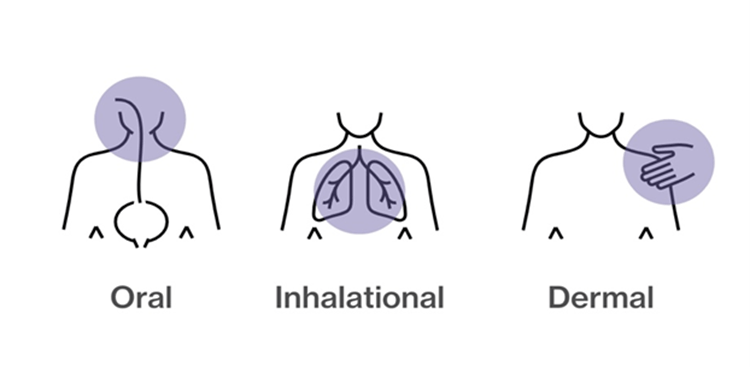
Contamination with hazardous drugs can occur via several routes: 

  • Oral – through ingestion 
  • Inhalation – breathing in vapors 
  • Dermal – contact

Different roles in handling hazardous drugs require specific recommendations: 

Pharmacists and Pharmacy Technicians

1. Use closed-system transfer devices (CSTDs) during drug compounding to prevent the escape of hazardous drugs or vapors. 

2. Work in a designated area with proper ventilation, such as a biological safety cabinet or compounding aseptic containment isolator. 

3. Wear appropriate personal protective equipment (PPE), including gloves, gowns, masks, and eye protection. 

4. Dispose of contaminated materials properly, following the facility’s hazardous waste disposal guidelines.

Nurses and Healthcare Providers 

  1. Utilize CSTDs during drug administration to minimize the risk of spills or leaks.  
  1. Wear PPE, such as gloves and gowns, while administering hazardous drugs and handling contaminated equipment. 
  1. Follow proper procedures for handling and disposing of hazardous drugs, including using puncture-resistant sharps containers for needles and syringes. 
  1. Educate patients and their families about the safe handling of hazardous drugs at home, including proper storage, administration, and disposal. 

Environmental Services and Waste Management Staff

  1. Wear appropriate PPE when cleaning areas where hazardous drugs are prepared or administered. 
  1. Follow facility-specific protocols for decontamination and cleaning procedures. 
  1. Dispose of hazardous drug waste according to local, state, and federal regulations. 

Medical facilities and employers play a critical role in supporting these safety measures by providing adequate resources, including: 

  1. Regular training and education for all staff handling hazardous drugs, ensuring they are well-versed in safety protocols and procedures. 
  2. Supplying the necessary PPE and CSTDs for all personnel who handle hazardous drugs. 
  3. Implementing specialized ventilation systems and designated areas for drug preparation and administration. 
  4. Establishing clear guidelines and procedures for decontamination, cleaning, and waste disposal. 

How can EQUASHIELD CSTDs help?  

Pharmacists can protect themselves from hazardous drug exposure by implementing various safety measures, including the use of EQUASHIELD® Closed System Transfer Devices (CSTD). These devices are designed to create a physical barrier between the clinician and the hazardous drug, minimizing the risk of exposure during the compounding and administration process. 

EQUASHIELD® CSTDs are unique in their ability to cover more routes of exposure than other solutions. Extensive clinical evaluation and studies4 have shown that standard syringes can become contaminated with hazardous drugs on surfaces exposed to the environment, potentially leading to vapor escape and plunger contamination. EQUASHIELD® addresses this issue with its closed-back syringe design, providing superior protection compared to alternative systems. 

In conclusion, minimizing exposure to hazardous drugs is crucial for the long-term health and safety of medical personnel. By implementing best practices, using CTDS, appropriate PPE and equipment, and providing ongoing training and support, medical facilities can create a safer work environment for all staff members involved in handling hazardous drugs.