
Q: How does USP <800> refer to closed system transfer devices (CSTDs)?
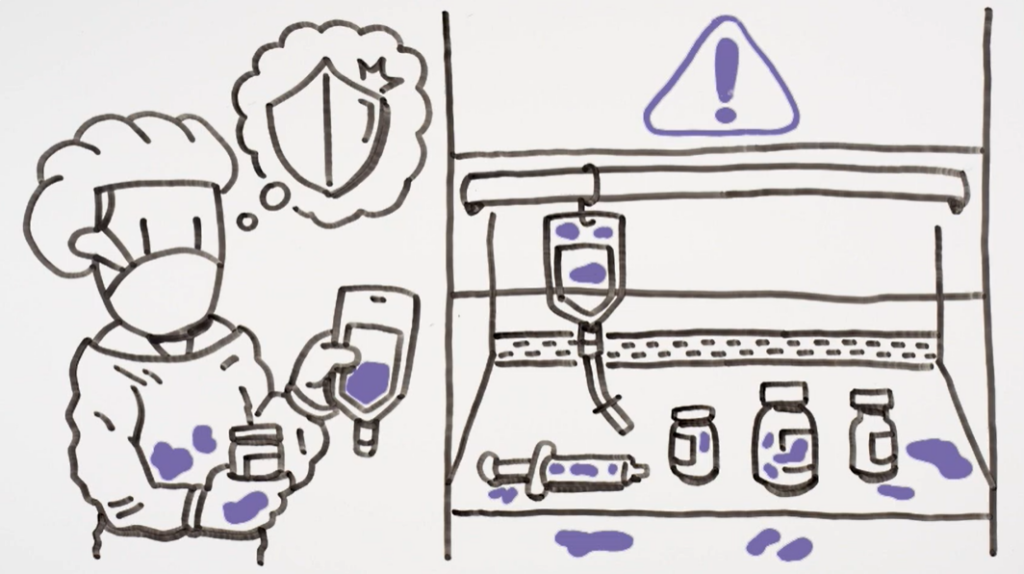
Antwoord: CSTD's worden aanvullende technische beheersmaatregelen genoemd die aanvullende beheersmaatregelen bieden om een extra beschermingsniveau te bieden tijdens het samenstellen of toedienen. Aanvullende technische veiligheidsmaatregelen kunnen ook zorgen voor een betere bescherming op het werk, vooral bij het hanteren van HD's buiten de primaire en secundaire technische veiligheidsmaatregelen om.
Q: Does USP <800> acknowledge that all CSTDs will perform adequately?
A: No, USP <800> reveals that there is no certainty that all CSTDs will perform adequately. Therefore, users should carefully evaluate the performance claims associated with available CSTDs based on independent, peer-reviewed studies and demonstrated contamination reduction.
V: Kunnen gevaarlijke medicijnen (HD's) verdampen bij kamertemperatuur, waardoor het risico van beroepsmatige blootstelling toeneemt?
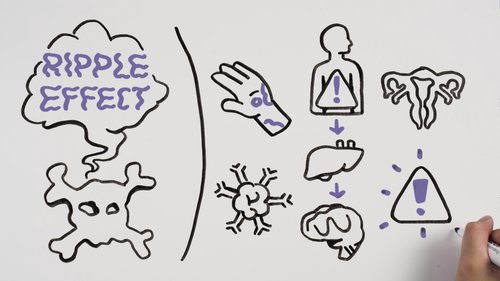
A: Ja, de Oncology Nursing Society (ONS) Toolkit voor veilige omgang met gevaarlijke geneesmiddelen voor verpleegkundigen in de oncologie identificeert 8 HD's die bij kamertemperatuur kunnen verdampen, waaronder Carmustine, Cisplatine, Cyclofosfamide, Etoposide, 5-Florouracil, Ifosfamide, Stikstofmosterd en Thiptepa.
Q: Why does USP <800> indicate that it is important to contain HDs vapors?
A: USP <800> states that a potential opportunity of exposure during administration includes generating aerosols of HDs by various routes (Ex. Injection, irrigation, oral, inhalation or topical administration).
Q: Does USP <800> indicate that a CSTD can help contain HDs vapors when utilized?
A: Yes, USP <800> states that some CSTDs have been shown to limit the potential of generating aerosols during compounding.
Q: Does USP <800> still allow for the use of two tiers of containment (Ex. CSTD within a BSC) that is in a non-negative pressure room for facilities that prepare a low volume of HDs?
A: No, USP <800> states that a CSTD must not be used as a substitute for a containment primary engineering control (C-PEC) which must be in a room with negative pressure between 0.01 and 0.03 inches of water column relative to all adjacent areas.
Q: When does USP <800> indicate that a CSTD should be utilized?
A: USP <800> states that a CSTD should be used when compounding HDS when the dosage form allows. Furthermore, USP <800> states that a CSTD must be used when administering antineoplastic HDs when the dosage form allows.
V: Geven de USP-normen aan hoe het aanbrengen van een CSTD op een injectieflacon de datering na gebruik (BUD) beïnvloedt?
A: No, USP <797> revisions and USP <800> do not state that attachment of a CSTD to a medication vial either reduces or prolongs the beyond use date (BUD) of a medication vial (single or multiple dose). Therefore, for medication vials with an attached CSTD, BUD remains unchanged from USP standards. USP, Joint Commission and other regulatory bodies also do not currently endorse the utilization of a CSTD for prolonging the BUD of single dose vials, which is also known as dose vial optimization (DVO) due to patient safety concerns.